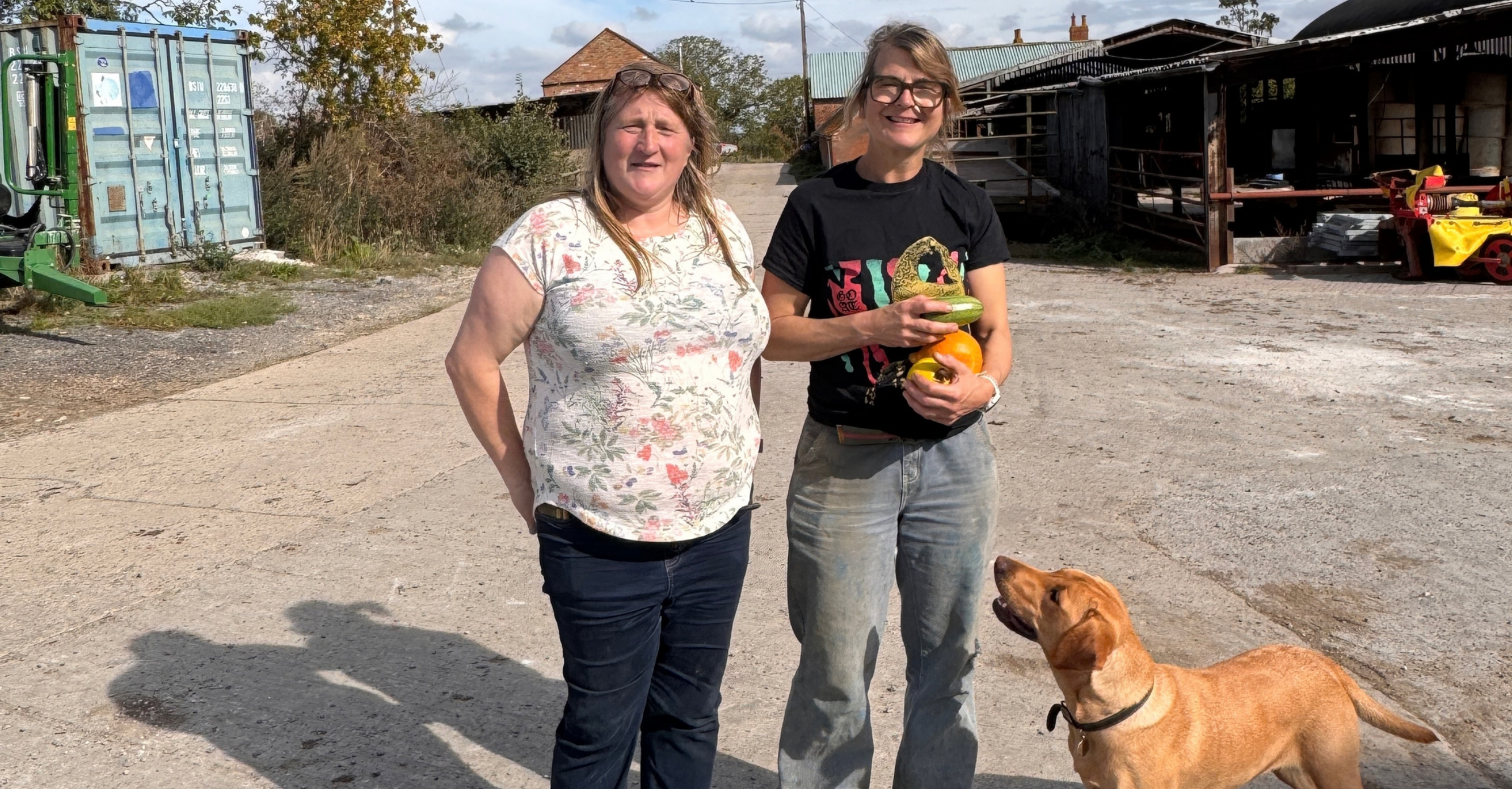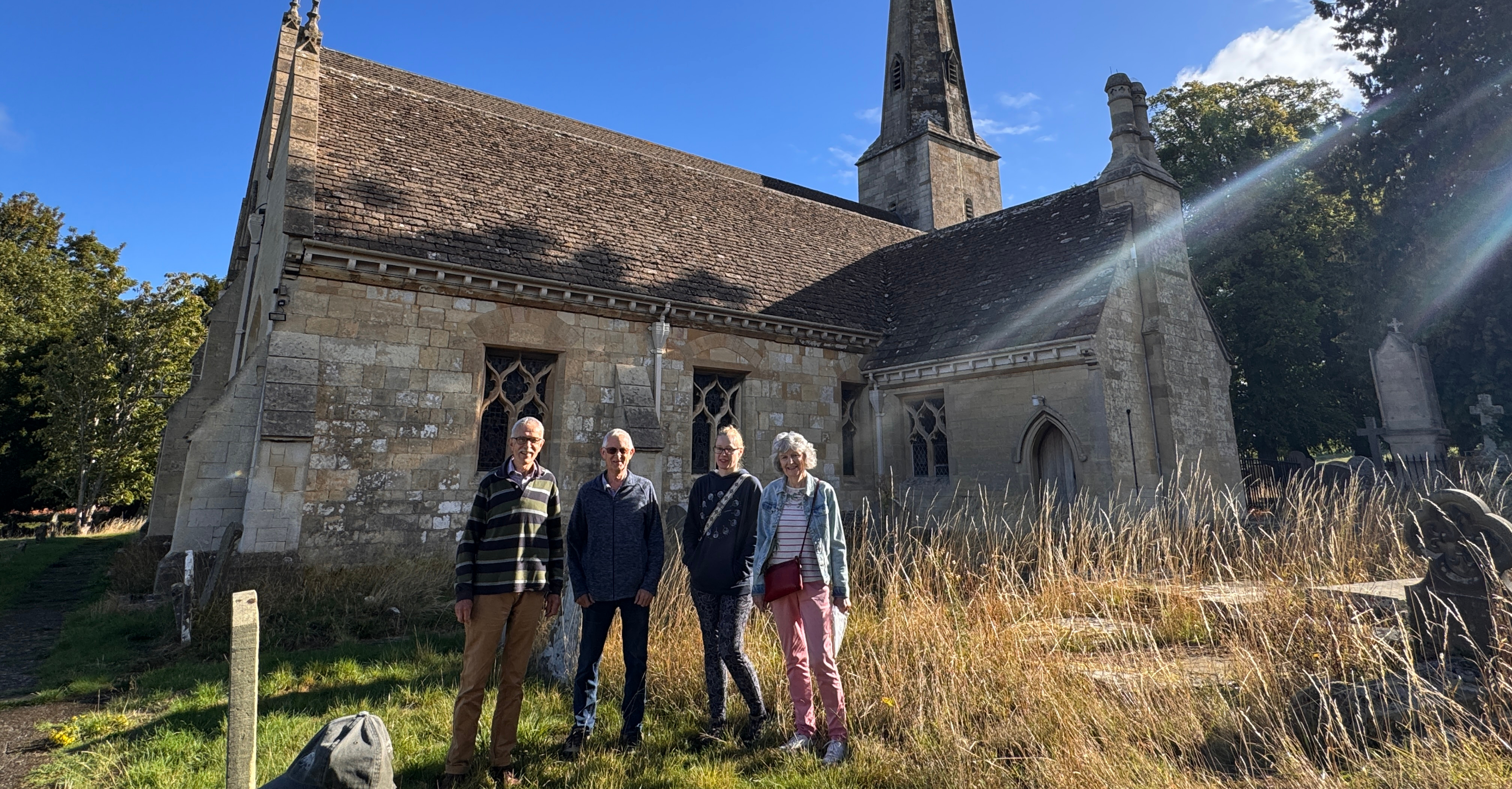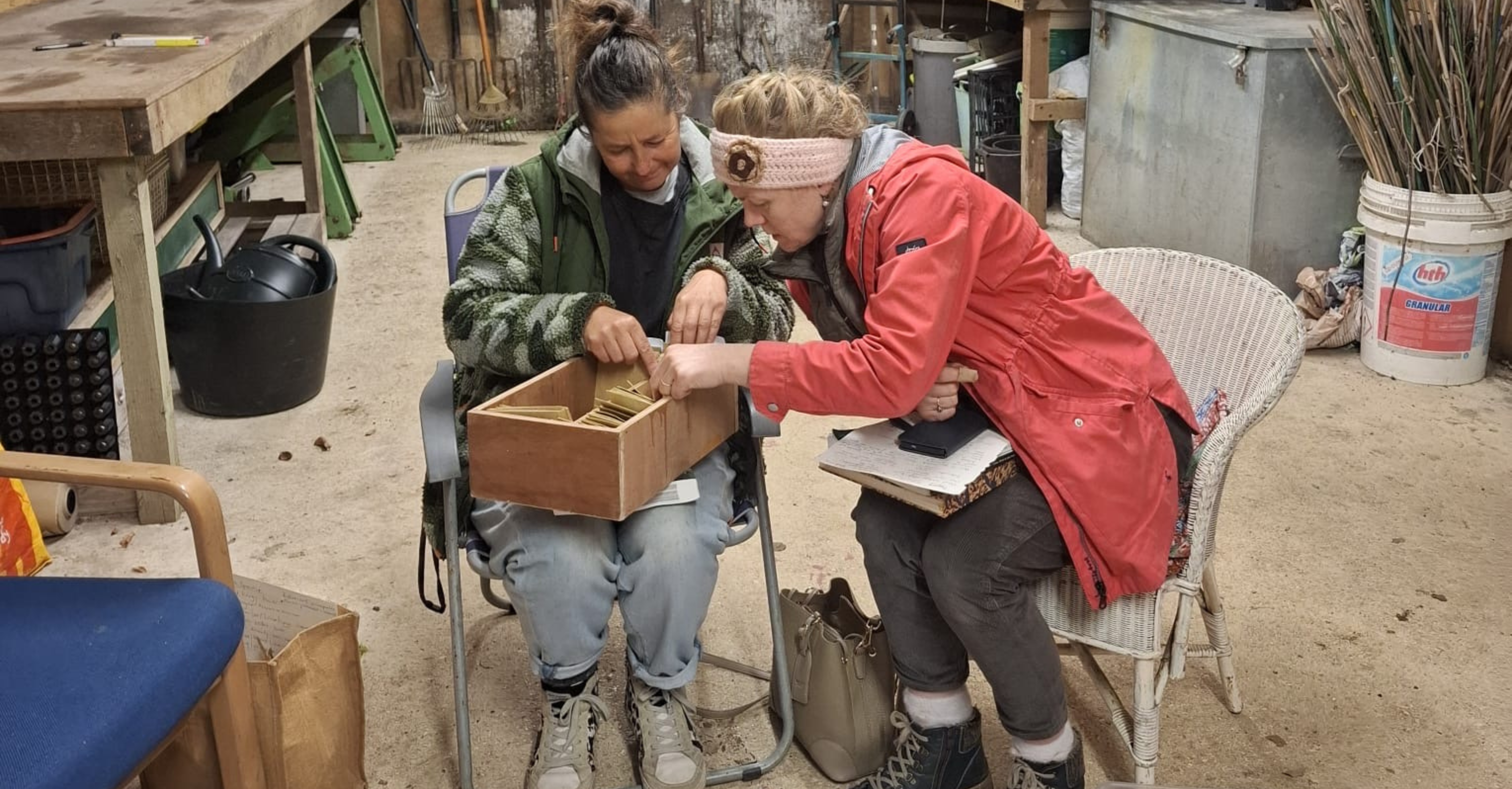
As part of our interest in supporting more nature-friendly growing across Cheltenham, Sarah and her friend Michelle recently travelled to a seed saving workshop at Old Mugwell Nursery in Miserden, run by Beth at LCMG Stroud.
The visit followed on from our earlier conversations with the group, and was a chance to explore how some of these ideas and skills could eventually become part of Grow Your Own Cheltenham and our wider Roots & Shoots work.
The workshop gave a whistle-stop introduction to the fascinating world of open-pollinated back garden and allotment seed saving, with the aim of helping people bring seed saving back into their yearly growing cycle – something that feels both practical and deeply connected to traditional growing methods.
It was a really interesting session, packed with useful information and hands-on learning.
Sarah said:
“There is something really satisfying about learning these traditional skills and understanding how we can become a little more self-sufficient in our gardens and allotments.”
The workshop covered several important seed-saving techniques, including:
- Winnowing – separating lighter chaff or waste from heavier grain or seed, traditionally using airflow after threshing.
- Threshing – loosening the usable seed from the husks, pods or plant material it is attached to.
- Fermenting seeds – used for crops such as tomatoes, cucumbers and aubergines. Leaving seeds to ferment in water for a few days helps remove the gelatinous coating around them, reduces disease risk and can improve germination.
- Roguing – identifying and removing weak, diseased or “off-type” plants before saving seed, helping to maintain healthy, vigorous crops.
As part of the session, they also looked in more detail at a particular crop. Sarah focused on purple sprouting broccoli and explored what is involved in saving seed successfully.


Because purple sprouting broccoli is insect-pollinated, mainly by bees and other flying insects, it needs to be grown some distance away from other compatible brassicas to avoid cross-pollination. Seed should ideally be saved from a good number of healthy plants, and harvested once the pods are dry in summer. The seeds are then dried, threshed, sieved and winnowed before being stored in cool, dry conditions, where they can remain viable for up to six years.
Learning about the amount of planning involved was a useful reminder that seed saving is both a practical skill and a long-term investment. It also highlighted how much local knowledge there is to share.
For Cheltenham, there is something particularly exciting about the idea of bringing these skills closer to home. Seed saving could become part of future Grow Your Own Cheltenham activities – helping people become more self-sufficient, grow varieties that suit local conditions, and build resilience into our gardens and allotments.
A big thank you to Beth and Amanda at LCMG Stroud for such an informative and inspiring workshop. Sarah and Michelle came away with lots to think about – and hopefully some new skills to put into practice in the growing season ahead.