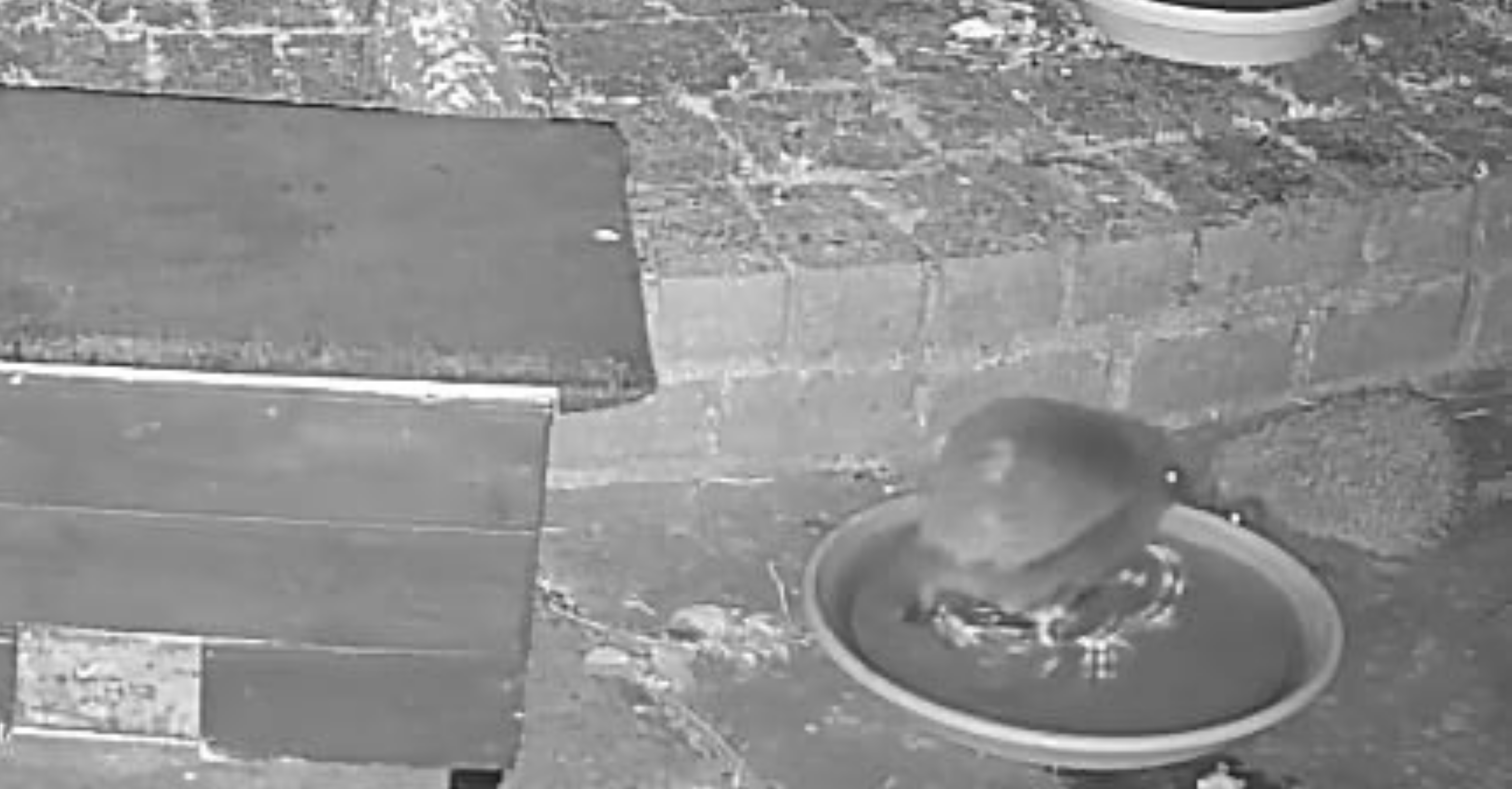
Hedgehogs are one of Britain’s best-loved wild animals, but they are also in serious decline. With hot, dry weather putting additional pressure on wildlife this summer, providing simple things like food, water and safe places to move can make a real difference.
We spoke to a local couple who have been encouraging hedgehogs into their garden for several years. They shared their experiences of their regular visitors – and some practical advice on how we can all make our gardens more hedgehog-friendly.
Over to them…
‘My husband and I have been encouraging hedgehogs in our garden for several years. For me they are one of the most endearing wild creatures. Thanks to the cameras installed in our garden, we have seen hours of entertaining footage of them feeding, courting and, it must be said, fighting. Our ‘principal’ hog is a big male called Fatty who visits most nights for food and water, but he was joined earlier in the year by a smaller male and a female. While the female was welcomed by both of the boys with a lot of excited circling and “chuffing” sounds, Fatty gives the smaller male hog an unmerciful hiding every time they cross paths, even rolling him into the water dish in one encounter.
Hedgehogs are also one of the many wildlife species in Britain in critical decline. Intensive farming, roads and habitat loss have caused a decline of up to 75% in the rural hedgehog population. Urban hedgehogs are doing slightly better, but they remain threatened by lack of food and, increasingly, water.
In this particularly hot and dry summer, we have noticed that the water we put out for the hedgehogs and other wildlife is as important as the food we supply. Fatty and his mates spend up to five minutes at a time having a long drink. Please, if you possibly can, put a large, shallow dish of water out in your garden and clean and refresh it each day. Hedgehogs really need clean water as stagnant water can infect them with parasites such as liver fluke. Foxes, birds, field mice and even insects will also benefit greatly from the water. If you have a pond, make sure that it has a ramp or some sort of escape route, since hedgehogs seeking a drink will drown if they can’t get out again.
In the wild, hedgehogs are primarily insectivores, preferring beetles, and one of the best things you can do for them is create a ‘hedgehog highway’ of small holes in your boundary fences. If you can persuade the neighbours in your street to join in, you will enable your local hogs to roam safely in search of food and mates without needing to navigate our roads (the hedgehog defence instinct of rolling into a ball, while very cute, is fatally ineffective against a moving car tyre). A ‘messier’ approach to gardening with wild areas and longer grass will encourage the insects that are your hedgehogs’ natural diet. Rescue centres see thousands of hogs every year that have been horribly injured by strimmers, mowers and garden netting, so please check carefully before using these in your garden.
If you are feeding your local hedgehogs, good quality kitten or cat biscuits are good. Our hedgehogs happily tuck into Go-Cat. Contrary to popular myth, hedgehogs cannot digest cereals or cow milk, so please don’t give them bread and milk. Dried mealworms, often sold as a hedgehog ‘treat’ are also bad news. Hedgehogs love them, but they’re very bad for them, putting them at risk of brittle bones. Another myth about hedgehogs is that they love slugs – they will eat them, but only if desperate for food, and slugs also carry the liver fluke parasite.
A hedgehog feeding station is easy to make or obtain and will prevent your hedgehog’s food being stolen by cats or foxes (we also feed our foxes). Ideally, it needs to have an ‘entry hall’ to prevent cats and other animals from reaching the food. Newspaper on the floor helps to keep the station clean and needs changing regularly; hedgehogs are messy eaters and ours could poo for Great Britain, including inside their feeder.
If you do just one thing though, this seemingly endless dry season, please give your hedgehogs (and the other wildlife in your garden) a nightly dish of clean water. It could be a lifesaver’.
Want to do more for hedgehogs?
There are lots of simple ways to support hedgehogs in our gardens and neighbourhoods. Brockworth Hedgehog Rescue covers the whole of Gloucestershire, including Cheltenham, and provides advice and care for sick, injured and orphaned hedgehogs.
And if you have the time and would like to help hedgehogs more directly, the rescue is also looking for volunteers.