What does a farm look like when you start asking not just what it can produce, but what else it can do?
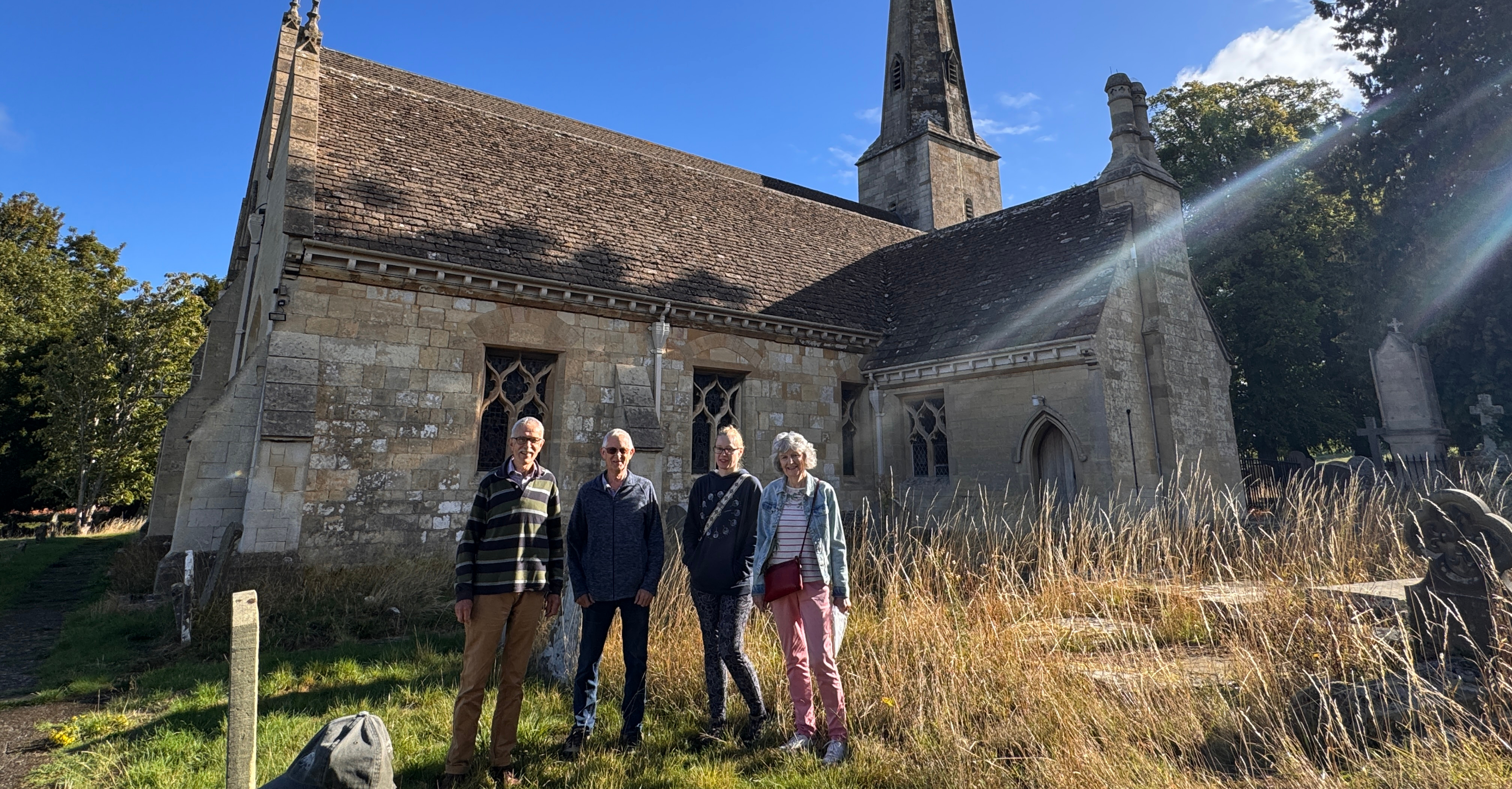
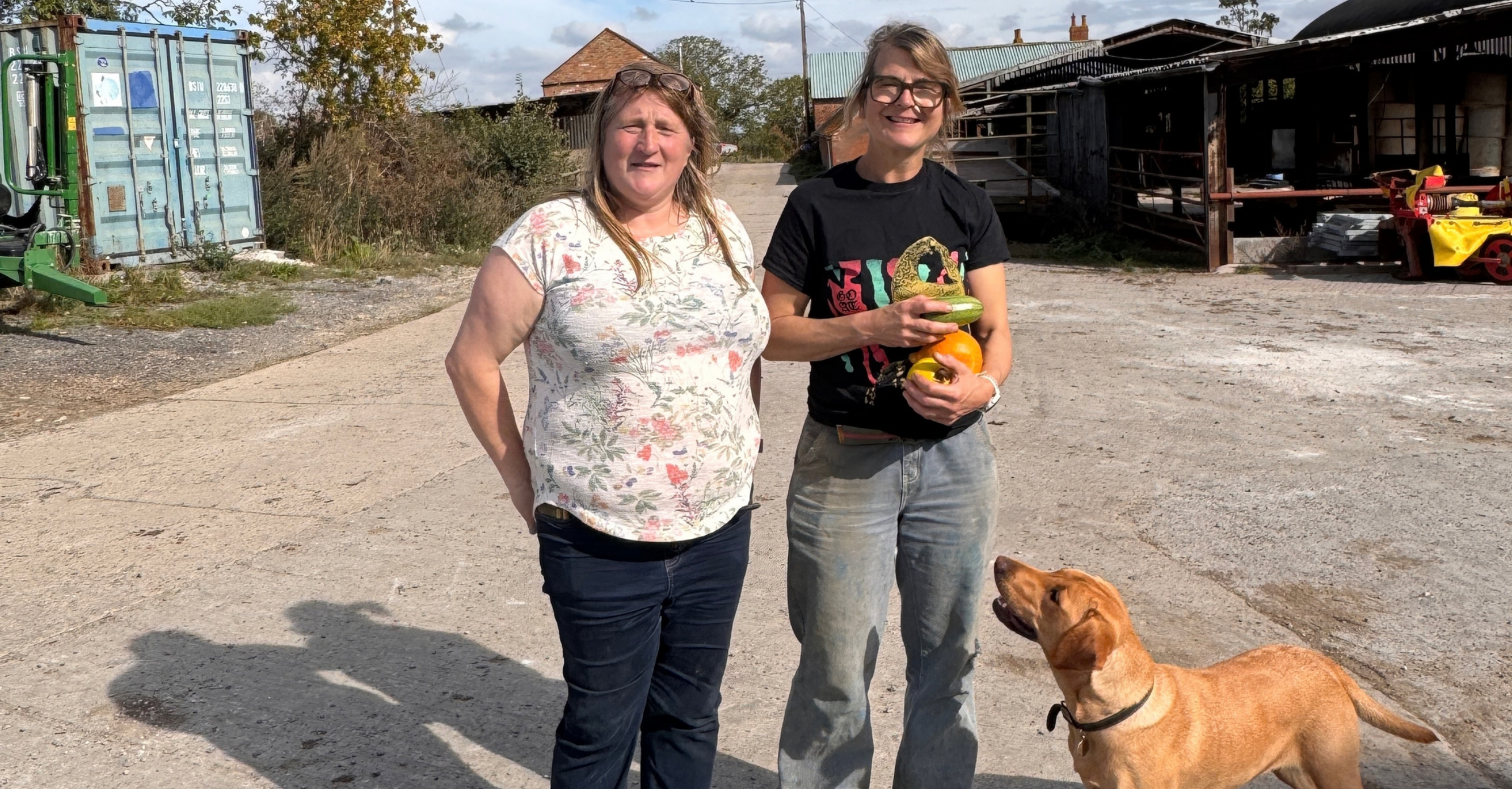
On Friday, we went to visit Norton Court Farm, between Cheltenham, Gloucester and Tewkesbury, and spent a few hours exploring the farm with sisters Debbie and Celia.
The farm has been in their family for generations. Their dad, Mike, farmed it as a traditional mixed farm, with dairy cattle, calves for beef and arable crops. He also had a strong connection with nature, leaving space for wildlife in the hedgerows and field margins. After his death in 2022, Debbie, Celia and their mum Jean have continued farming while beginning to take the farm in some new directions.
Today, Norton Court Farm is becoming a fascinating example of how farming, nature and community can sit alongside each other.
A working farm, working with nature
The main farm is around 400 acres, with additional blocks of land nearby. It remains a working mixed farm, but there is a strong focus on improving soil health, supporting biodiversity and working with natural systems.
Debbie is particularly interested in soil and regenerative agriculture, drawing on her background in scientific research. The farm’s approach starts with the idea that healthy soil is a living ecosystem – one that can support crops, store water and carbon, and help make the farm more resilient.
There is plenty of evidence of that wider thinking across the farm.


The farm has species-rich wetland meadows, around 43km of hedgerows, a traditional cider and perry orchard and about forty acres of mature woodland.
They are also developing agroforestry projects, planting lines of trees through arable fields, creating roundels within grazed fields and planting willows that livestock can browse. The trees will provide habitat and help bring more diversity into the fields, as well as offering shade for livestock as temperatures rise.
And water is a big part of the picture.
The River Chelt runs through the farm, and because the farm is downstream from a sewage works, Debbie and Celia are beginning to work with the Guardians of the River Chelt to monitor water quality.
They are also working with the Severn Rivers Trust to explore how the fields alongside the river can be made wetter, helping to hold water during periods of heavy rainfall and reduce flood pressure further downstream.
There are more than 20 ponds across the farm, as well as the Leigh Brook, adding another layer of wetland habitat to the landscape.
At one point, we were standing on a bridge over the River Chelt when we heard a sudden sploosh. A kingfisher flew towards us and straight underneath the bridge – too quick for a photo, but just enough time to catch that unmistakable flash of blue.
It reminded us that nature recovery doesn’t happen in neat categories. Soil, trees, farming, rivers, ponds, wildlife and food production are all part of the same system.
Something new is growing
Alongside the farm, Debbie and Celia are developing Norton Community Farm, a community-led growing project on a three-acre field.
The aim is to create a place where people can grow food, learn, share skills and spend time outdoors together. The growing space is intended to be open to individuals and families, community groups, schools and youth organisations, experienced growers and complete beginners.
The first community growing projects are already underway, including a community orchard and the 1000 Seeds Project, where local primary school children have helped plant a crop of sweetcorn, climbing beans, squash and sunflowers. The project uses companion planting, with the different crops supporting each other as they grow.
There are also plans for individual allotments, a market garden and, in time, a veg box scheme and other ways for locally grown food to reach the surrounding community.
What particularly struck us was the emphasis on sharing.
The community allotments aren’t just being imagined as individual plots where everyone disappears behind their own shed. There is a real ambition to create a growing community – sharing knowledge, skills and tools, helping each other and learning together.
Growing food can be about so much more than the food itself. It can be a way of bringing people together, passing on knowledge, connecting people with the land and creating places where nature and people can thrive alongside one another.
A glimpse of what could be possible
There was a lot to take in during our visit – and we haven’t even mentioned the lovely Labrador, Nelly, who showed us around too.
What stayed with us was the sense that Norton Court Farm isn’t choosing between farming and nature, or food and community.
It’s a working farm, producing food and looking after livestock. But it’s also creating more space for wildlife, thinking carefully about soil and water, experimenting with agroforestry, and opening up opportunities for people to grow, learn and connect with the land.
And that feels very relevant to some of the conversations we’ve been having at Cheltenham Action for Nature over the past year.
We’ve been talking to allotment holders, exploring soil health, supporting growers to share skills and knowledge, learning about seed saving and community growing, and thinking about how the places where we grow food can form part of the wider tapestry of habitats across Cheltenham.
Norton Court Farm gave us another perspective on that question.
What might it look like if food production, nature and community were seen as parts of the same landscape?
We came away with lots to think about – and we’re looking forward to staying connected with Debbie and Celia and seeing what grows next at Norton Court Farm.
If you’d like to find out more about what is happening at Norton Court Farm, they have open days and other opportunities to visit and get involved. Visit the Norton Court Farm website to find out what’s coming up and sign up for updates.