It’s hard to believe that Cheltenham Action for Nature has been around for nearly a year.
When we were getting started, one of the first things we did was ask people across Cheltenham what they thought about nature in the town. We had already begun putting the basics in place – our website, social media and the group itself – but we didn’t want to decide what Cheltenham Action for Nature should focus on without hearing from the people who live here.
So we launched our survey.
Back in February, we shared what you told us in our first survey results story. The survey has stayed open since then, and people have continued to add their views.
But there is another reason we wanted to return to that first survey now, nearly a year on. We wanted to look at what we have actually been doing and ask ourselves a simple question:
How much of what we’ve spent the last year exploring connects back to what you told us at the beginning?
As it turns out, quite a lot.
You told us that parks, green spaces and trees matter
The most common positive theme in the original survey was the value people place on Cheltenham’s parks and green spaces, and on the trees that help make the town green and welcoming.
Over the past year, we’ve spent time getting to know some of these places and, just as importantly, the people who care for them. We’ve visited green spaces and nature reserves with local Friends groups, talked to the people involved about what they are doing, and heard about the challenges they face.
We’ve also started conversations with the Green Spaces team about how we can better understand and support the work already happening across the town.
And we’ve been talking with the allotments team too, exploring the connections between allotments, the people who use them and the wider role these spaces can play for nature.
The more places we visit, the more we see that Cheltenham’s nature isn’t confined to the places labelled as nature reserves. It is woven through parks, playing fields, allotments, verges, gardens and small patches of green.
You told us that everyday wildlife matters
People talked in the survey about the wildlife they enjoy seeing – birds, pollinators, bats, moths and all the other creatures that make the places where we live feel alive.
Some of our work this year has been about helping people notice that nature.
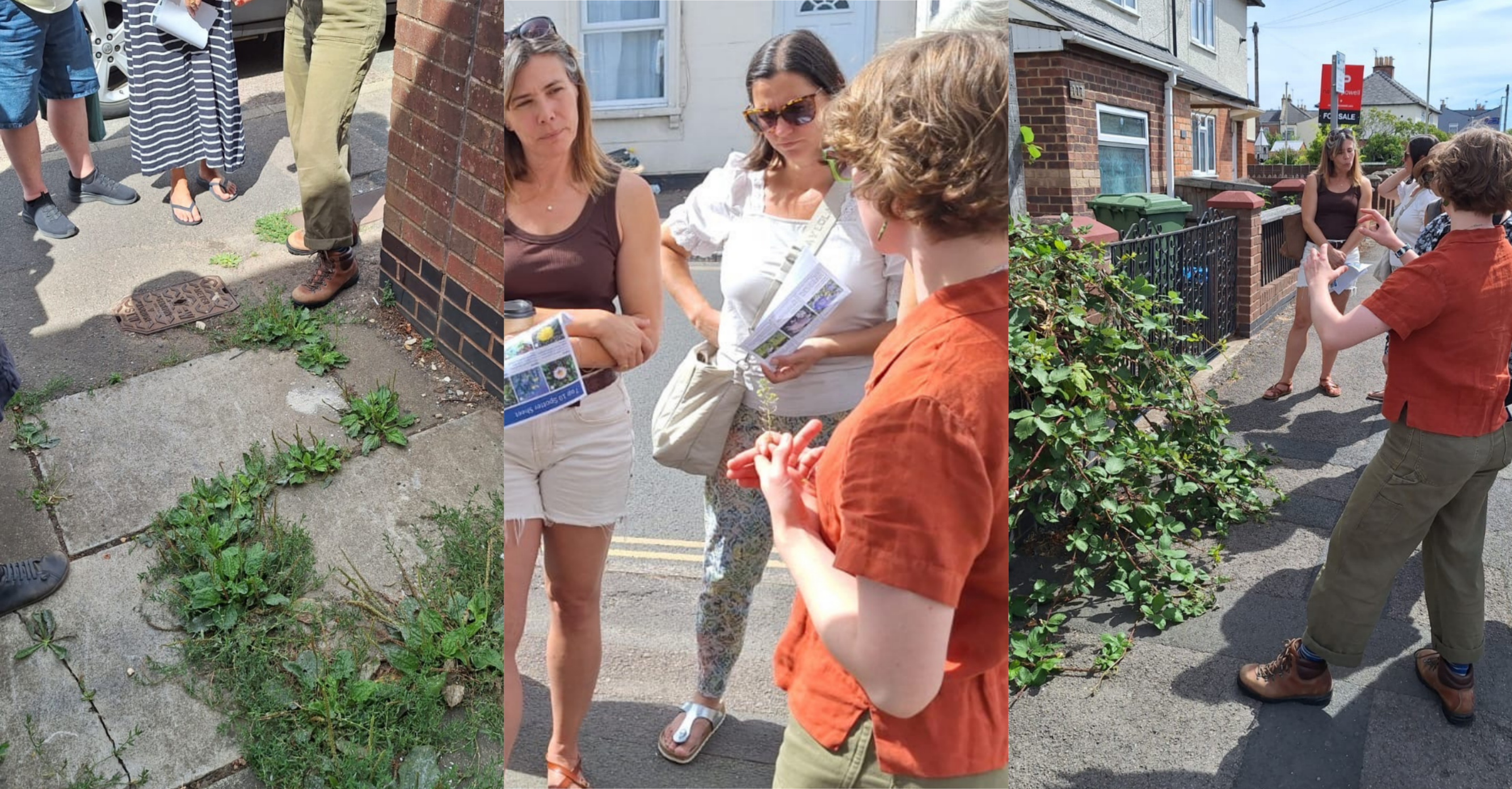
We’ve run walks where people could stop and look more closely at the plants and wildlife around them, including our wild plant walk through St Paul’s and Pittville Park. We’ve also helped people experience nature in different ways, including a Dawn Chorus walk, and talks about wildlife such as bats.
We’ve started Noticing Nature with The Wilson – a monthly opportunity to slow down, look more closely and explore our relationship with the natural world through creativity, conversation and the museum’s collections.
We’re also beginning to build practical resources to help people support nature and wildlife in their own gardens and other outdoor spaces.
And sometimes the most practical action is about one particular species. This year we’ve supported the development of the Charlton Kings Swift & House Martin Support Group, helping people learn more about these remarkable summer visitors and what can be done locally to provide nesting places. More than 20 swift boxes have now been installed in Charlton Kings.
We’ve also helped promote groups doing very practical work for particular species, including Brockworth Hedgehog Rescue.
You told us that community groups and volunteers are important
This has probably been one of the biggest parts of our first year. We’ve met with many community groups, Friends groups and volunteer organisations across Cheltenham to hear about their work.
We’ve heard about the things that are going well, but also about the less visible challenges: finding volunteers, securing funding, getting access to information, navigating council processes, keeping projects going and finding the time and capacity to do everything that needs doing.
We’ve visited people in the places where they work and spent time understanding what they are already doing rather than arriving with our own project ideas.
That has changed our thinking about the role Cheltenham Action for Nature could play. There is already a huge amount of knowledge, enthusiasm and practical action in Cheltenham. We don’t need to duplicate it.
We need to find ways to support, connect and amplify it.
We’re now starting to think about what that could look like in practice, and how stronger connections between groups could help both the people involved and the wider recovery of nature across the town.
You told us that gardens can help nature
The original survey showed that many people were already doing things for wildlife in their gardens and allotments. This year we’ve tried to turn some of that interest into practical ideas people can take away and use.
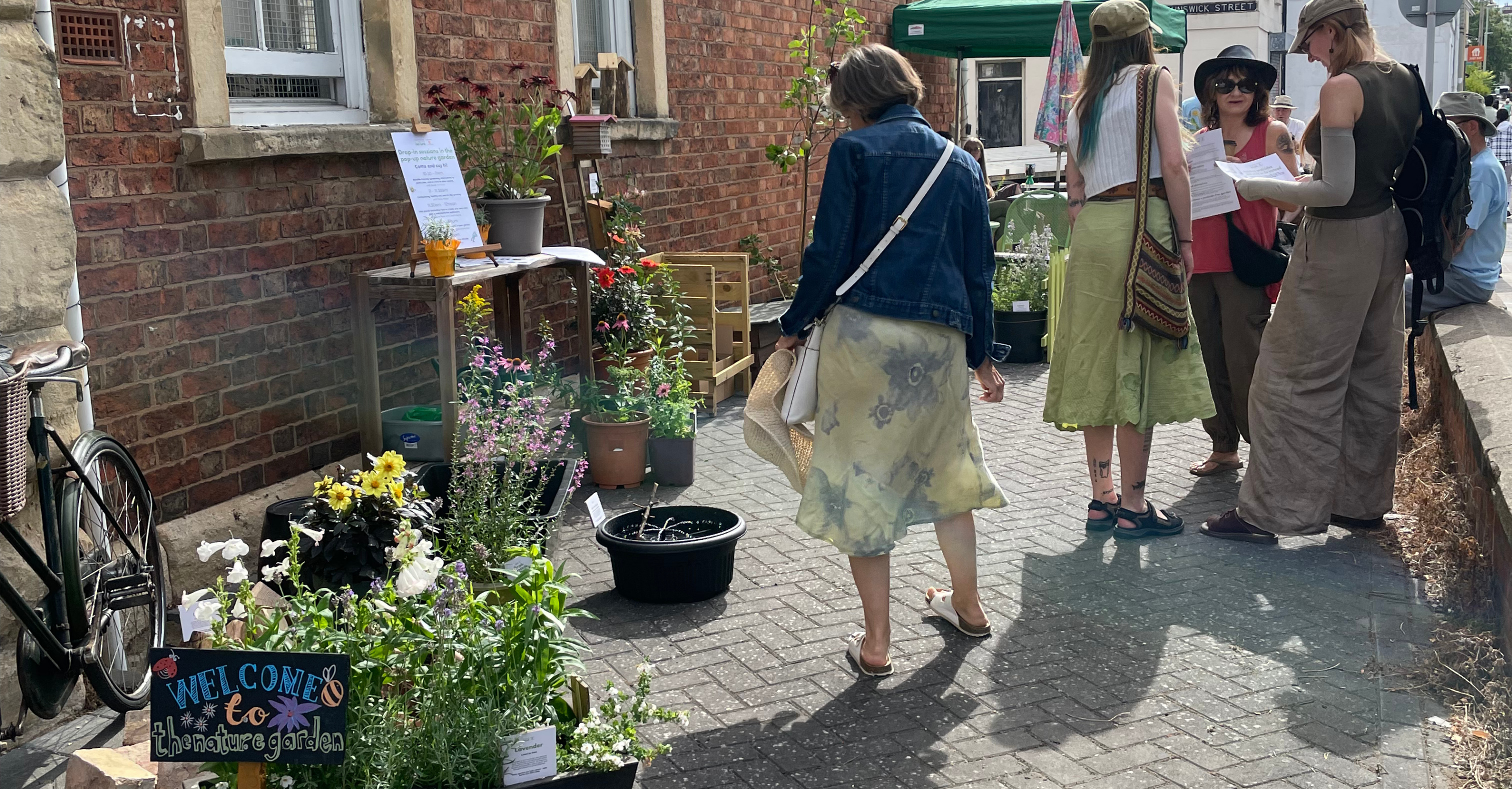
In August, we held Cheltenham Gardens for Nature in St Paul’s, bringing together talks, walks, practical activities and local organisations to explore what gardens, balconies, patios, pots and other small spaces can do for nature.
We created a pop-up nature garden to demonstrate some of the possibilities – from wildlife-friendly planting and a small pond to bird boxes, insect shelter, a hedgehog house, log piles, a dead hedge and composting.
We’ve also started adding practical resources to the website, including ideas for gardening for wildlife, gardening without pesticides and gardening in a changing climate.
And we think it is important to be willing to talk about some of the trickier aspects of gardening for nature too. Pesticides are a good example. They can be an important and sometimes complicated subject for gardeners, allotment holders and people managing larger spaces. We’re interested in understanding the issue, looking at the impacts on wildlife and exploring practical alternatives.
The same applies more broadly to how we manage land. Supporting nature often means asking difficult questions about what we do, why we do it and whether there are better ways of achieving the things people need while also giving nature more space.
You told us that nature needs to be better connected
This was one of the clearest opportunities for improvement in the original survey. People told us that nature doesn’t stop at the boundary of a park. They wanted better connections between parks, gardens, verges, green spaces and the countryside beyond Cheltenham.
Over the past year, we’ve started exploring what that could mean in practice. We’ve talked to organisations including Gloucestershire Wildlife Trust and looked more closely at the nature recovery mapping already available for the area.
We’re interested in how that information could help us understand where wildlife corridors and other connections might be strengthened across Cheltenham – and what role gardens, allotments, parks, waterways and other spaces could play.
This is still developing. We don’t have a finished map or a list of answers. But we are beginning to see Cheltenham differently: not as a collection of individual green spaces, but as a living network.
You told us that our waterways need more attention
Waterways were another area where the survey showed a clear desire for more action. Over the year, we’ve been highlighting the work of Guardians of the River Chelt and Wild Trout Trust and now understand more about the river, and can support the positive work already happening and share what we are learning.
That has included looking at water quality, habitat and the pressures the river faces, as well as supporting the people who are already monitoring and caring for it.
The River Chelt has also given us a very tangible reminder of how closely nature, climate and our everyday lives are connected.
It is one reason we increasingly think about nature recovery alongside climate resilience. Healthy rivers, connected habitats, healthy soils, trees and wildlife-rich gardens all form part of the same picture.
You told us that development can put nature under pressure
This is one of the bigger challenges we’ve been thinking about recently. The original survey included concerns about habitat loss, tree removal and the impact of development on nature.
We don’t yet have a finished answer to this.
But we are beginning to explore how Cheltenham Action for Nature, alongside other organisations and people with an interest in nature, could help make sure the needs of nature are considered earlier and more effectively when development is being planned and designed.
That means understanding how planning and development work, understanding where nature is most important, and thinking about how the expertise and experience of local nature organisations could be better connected to those processes.
It is early days, but we think it is an important part of the bigger picture.
You told us that you wanted a more joined-up approach
Perhaps the most important thing people told us about Cheltenham Action for Nature itself was what they wanted us to do.
You wanted us to:
- bring people and groups together
- share information and opportunities
- support practical projects
- help unlock resources and funding
- amplify existing work rather than duplicate it.
Nearly a year on, those ideas are becoming increasingly important to how we see our role. There is already so much happening across Cheltenham. The question we are now asking is:
What could happen if we were better connected?
We are beginning to explore what a more joined-up approach to nature recovery in Cheltenham could look like – bringing together the knowledge of local groups and organisations, the priorities in the Gloucestershire Local Nature Recovery Strategy, the experience of people who live here and the practical opportunities that exist in different parts of the town.
We’re also starting to think about how a shared Nature Recovery Vision for Cheltenham could help turn that thinking into action, and how a place-based approach could give us somewhere to test what works.
There is a lot still to work out. But the direction is becoming clearer: understand what is already happening, identify where the gaps and opportunities are, bring people together around a shared picture of what nature recovery could look like, and then turn that into practical action.
And then there is the practical action
We’ve spent a lot of this first year listening, visiting, researching, talking, learning and making connections. But none of that is the end goal. The point is to get to real action that helps nature recover.
Sometimes that action is small: installing a swift box, planting for wildlife, leaving a little more space for nature, learning to identify a plant or taking part in a river monitoring session.
Sometimes it is about supporting people who are already doing the work.
And sometimes it means tackling the bigger questions: how we connect habitats, how we protect nature as Cheltenham changes, how we support the people caring for our green spaces, how land is managed, and how we work together on nature recovery across the town.
Nearly a year on
When we look back at that first survey now, we don’t see a checklist that we have worked our way through. We see a starting point.
You told us what you valued.
You told us where you were worried.
You told us what was already happening.
And you told us where you thought Cheltenham Action for Nature could help.
Nearly a year later, we’ve met people doing brilliant work across the town. We’ve visited green spaces, talked to volunteers, supported practical projects, run events and walks, worked alongside existing groups, researched the challenges facing nature and started exploring what a more joined-up approach to nature recovery could look like.
We’ve also learned that some of the questions facing nature in Cheltenham are complicated. There aren’t always simple answers, and sometimes supporting nature means having conversations about difficult subjects and finding ways forward that work for both people and wildlife.
Over the next few weeks, we’ll be sharing more about what this first year has looked like – the things we’ve done, the people we’ve met, what we’ve learned and some of the questions we’re still working through.
Because this first year has given us a much better understanding of Cheltenham, its people, its places and the work already happening for nature. And all of that will help shape what we do next.
If you haven’t completed the survey yet, (you can still share your views here). We’d love to hear from you.