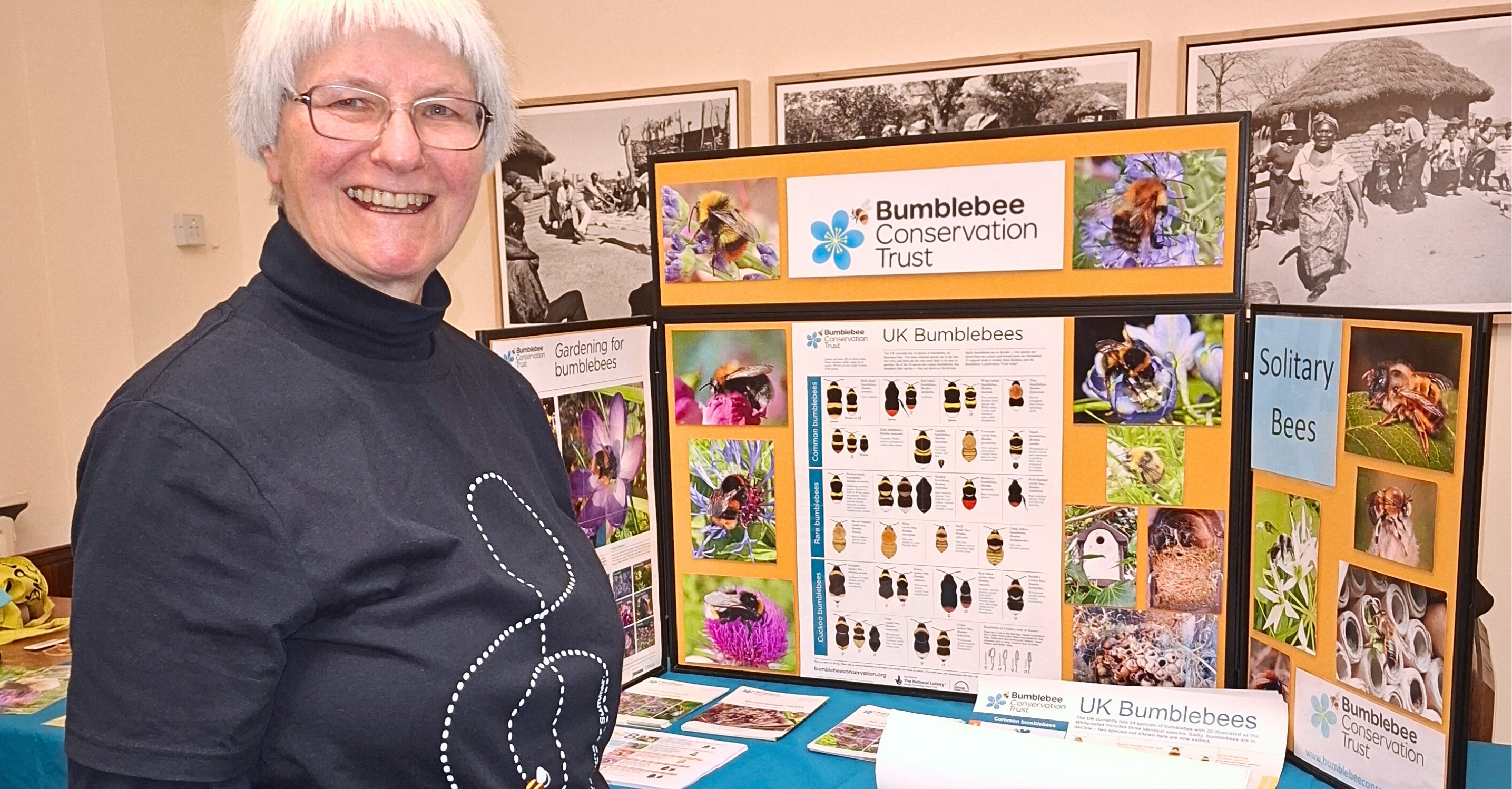
One of our members, Claire, gave a talk to the Cirencester and District Beekeepers on behalf of the Bumblebee Conservation Trust last night. Sarah went along to listen and learn – and came back with a head full of bumblebee facts, practical ideas, and a renewed sense of how much small actions can matter.
Here are Sarah’s reflections on the talk:

“Last night I had the pleasure of joining the Cirencester and District Beekeepers to watch Claire give a fascinating and inspiring talk all about bumblebees.
Bumblebees are among the most loved and familiar of our garden insects. That soft, comforting buzz as they move from flower to flower is a quintessential sound of British summertime. Sadly, though, these much-loved insects are struggling to survive.
There are 24 species of bumblebee in the UK, and they play a vitally important role in our ecosystems, one we often take for granted.
Bumblebees are incredible pollinators, responsible for helping grow many of our everyday favourites, including raspberries, strawberries, cucumbers, tomatoes and apples.
One of the most shocking facts shared was that 97% of the UK’s wildflower meadows have disappeared in the last 80 years. With fewer wild spaces and flowers, our pollinators are being left with far less to eat.
Gardening for bumblebees
Bumblebees can only feed from flowers, so planting with them in mind can make a real difference. Here are some great bee-friendly plants to grow throughout the seasons:
Winter:
Mahonia, Winter Honeysuckle
Spring:
Flowering currant, comfrey, pussy willow, crocuses, snowdrops, dandelions, pulmonaria
Summer:
Alliums, borage, foxgloves, catmint, herbs of any kind
Late Summer:
Marigolds, cosmos, honeysuckle, lavender, verbena
My favourite (and funniest) fact of the evening? Bumblebees have smelly feet! After feeding, they leave a scent on a flower to signal to other bees that it’s already been visited, saving them the energy of landing on a flower with very little pollen left.”