Earlier this month, Claire from Cheltenham Action for Nature attended the Wilding Gardens Conference in Manchester, a two-day event bringing together gardeners, designers, land managers and conservationists to explore how wilding principles can work in real places.
The conference was convened by Charlie Burrell and Isabella Tree, best known for the Knepp Estate in Sussex, and featured short talks from 25 speakers covering everything from gardens and allotments to larger landscapes and water management. Many attendees worked in horticulture, landscape design or conservation, including staff from the National Trust.
While the scale and settings varied, a few shared ideas stood out – and they resonate strongly with what we’re hearing locally in Cheltenham.
Diversity, not perfection
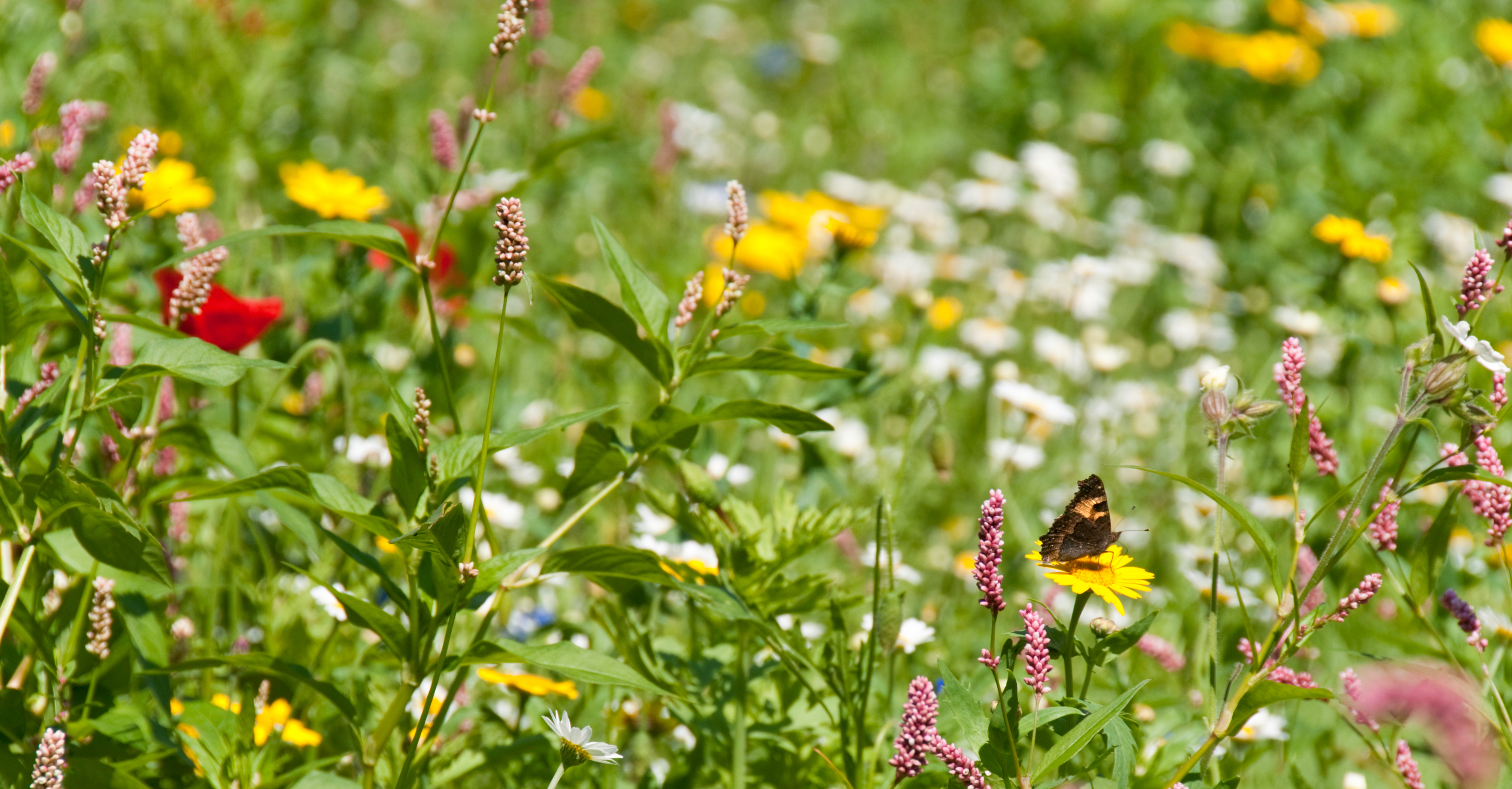
A recurring message was the importance of diversity – in planting, habitats and structure. Wilded gardens don’t need to be messy or neglected, but they do benefit from complexity and variety.
One speaker described a wilded garden as a kaleidoscope: always changing, with different colours, textures and species appearing over time. The role of the gardener isn’t to control everything, but to gently guide – cutting back where needed, creating paths or edges so spaces feel intentional and welcoming.
Interestingly, some of the richest diversity happens where soils are less fertile and conditions are a little tougher – a useful reminder that nature doesn’t always thrive on inputs and intervention. Wilding also goes beyond plants. Creating humps and hollows, banks, trenches, hedges and simple structures can add layers of habitat that support a much wider range of life.
Connecting gardens, connecting people
Another strong theme was connectivity. Individual gardens matter – but their impact grows when they’re linked together, and when they connect to larger green spaces nearby.
Speakers talked about the idea of neighbouring gardens acting as corridors for wildlife, and about how this kind of shared effort can also build a sense of community. Rather than asking people to radically change overnight, the emphasis was on meeting people where they are, sharing what others are already doing, and making change feel collective rather than lonely.
That sense of “doing it together” feels especially relevant in towns like Cheltenham, where small actions across many places can add up to something meaningful.
Insects at the heart of it all
If there was one group of creatures that dominated the conversation, it was insects.
Time and again, speakers returned to the idea that insects underpin almost everything else – from pollination to birdsong. Towns and cities were highlighted as important refuges, with gardens and allotments offering huge opportunities for conservation.
One striking idea was thinking about the soundscape of a garden, not just how it looks. In a culture that focuses heavily on visual appearance, it’s easy to forget that silence can be a warning sign. Creating spaces that support insects means creating places that buzz, hum and rustle with life.
For birds, this means thinking beyond feeders. Caterpillars and other invertebrates are essential food for young birds, and planting to support them can be more beneficial than imported seed mixes grown with pesticides elsewhere.
Taking it slowly
Wilding isn’t a quick fix. Another strong message was the importance of slowing down, observing what happens, and being curious. Wilded spaces are always evolving, and learning comes from noticing what appears, what thrives, and what doesn’t.
Rain gardens also featured, highlighting how managing water thoughtfully can support both wildlife and resilience to heavier rainfall – another area with clear relevance for urban settings.
What this means for Cheltenham
For us at Cheltenham Action for Nature, these ideas reinforce something we’re already hearing locally: that everyday spaces matter, that people care deeply about nature close to home, and that connection – between places and between people – is key.
If you would like to talk more about the conference, and how we can use these learnings in Cheltenham, please do get in touch at hello@cheltenhamactionfornature.org.