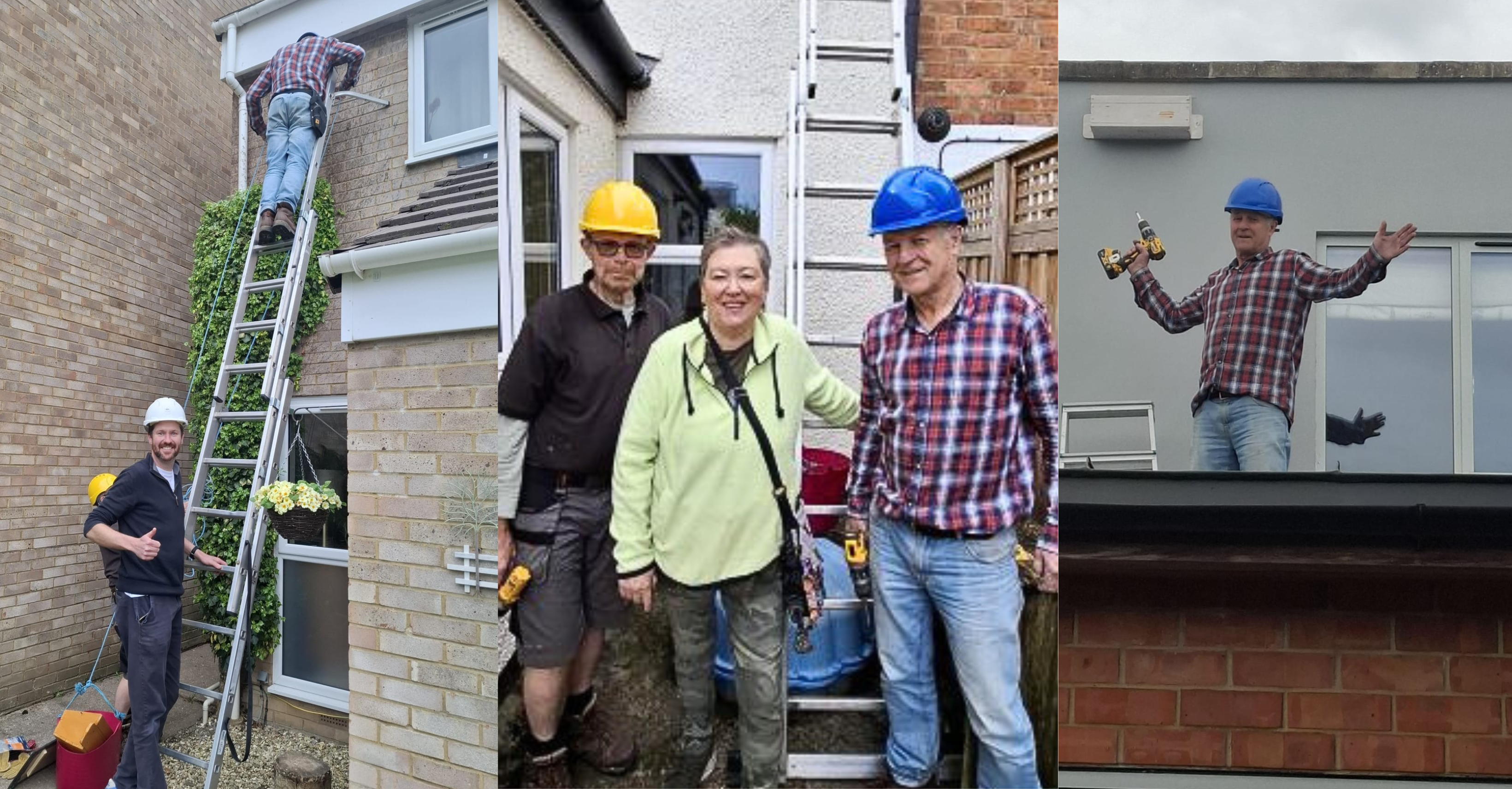
Sarah and the rest of the Swift and House Martin Support Group have spent the last week installing swift boxes across Charlton Kings.
“WOW… what a fantastic start to installing swift boxes in CK!
It all began months ago with a few conversations with local people, and now, nearly a year later we’ve successfully installed our very first boxes.
A huge thank you to everyone involved, especially Cheltenham Action for Nature, Brian from the Winchcombe Swift Group, Tom Mabbett (local bird expert), and The Butterfly Garden, for their support in making this happen.
The boxes (made by The Butterfly Garden and Tim from Cheltenham Action for Nature) have been made from old pallets and recycled materials, and we’ve installed around 17 so far- with more to come. We’ve also been working with Vision 21, who have been incredibly supportive in helping with governance.
Before each installation, a risk assessment is required, so special thanks to Felicity from Cheltenham Action for Nature for carrying out this important work.
The installation team- myself, Andy (Felicity’s husband), and Tim have had a couple of practice runs, and we’ve now got the process down to about 40 minutes per box, including setup and takedown. Our quickest installation time for fitting a box is just 9 minutes!
We’ve installed boxes on a wide range of houses, all with different elevations and heights. At one property, we didn’t have back or side access, so we had to carefully carry our huge ladders through the house without causing any damage… very nerve-wracking!
This project has taken us all over Charlton Kings, and along the way we’ve met so many supportive people who are keen to help these wonderful little birds.
A few fascinating facts about swifts:
- Swifts are truly extraordinary birds, spending almost their entire lives in the air.
- They eat, sleep, and even mate while flying, only landing to nest.
- They can remain airborne for up to 10 months at a time. Young, non-breeding birds may not land at all for 2–3 years.
- They are among the fastest birds in level flight, reaching speeds of up to 69 mph.
- Their scientific name Apus means “without feet,” reflecting their tiny legs, which are adapted for clinging rather than walking.
- They feed on flying insects and spiders, creating “boluses” (food balls) of over 300 insects to feed their young.
- Swifts are highly loyal to their nesting sites, returning to the same crevice or nest box each year.
- They migrate an astonishing 14,000 miles annually, breeding in Europe and wintering in sub-Saharan Africa.
- They have a sleek, dusky brown-black appearance, with long crescent-shaped wings and a short forked tail.
- Swifts are now red-listed in the UK, mainly due to the loss of nesting sites, which makes projects like this so important.


Finally, it just leaves me to say a heartfelt thank you for all the support… we truly couldn’t have done it without you.” Sarah.
Read more about swifts and house martins on our resources page