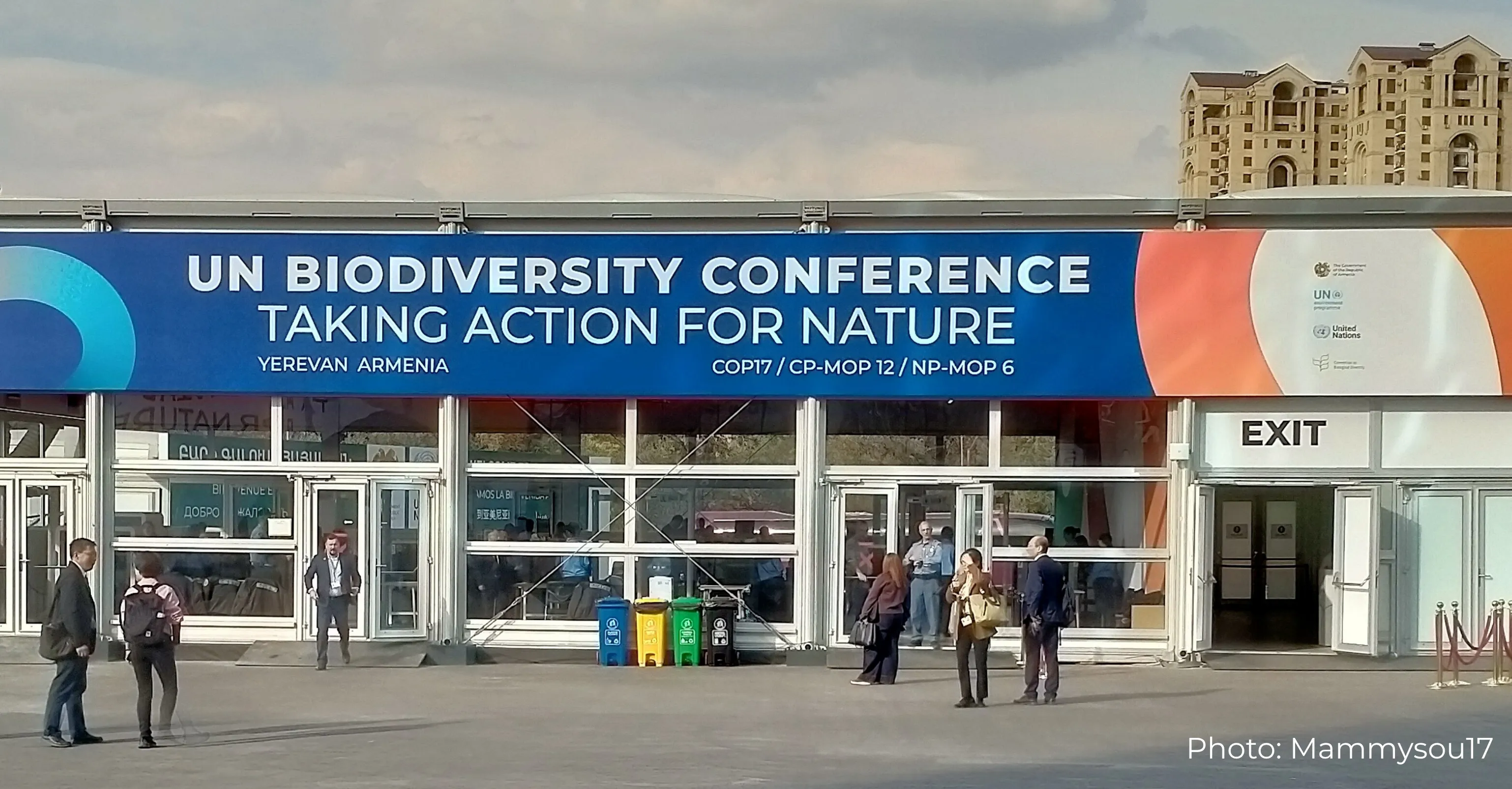
In October, representatives from almost 200 countries gathered in Yerevan, Armenia, for COP17 – the UN Biodiversity Conference. Their task was enormous: to review progress towards the global commitment to halt and reverse biodiversity loss by 2030, and work out how to turn that ambition into reality.
It is no small challenge. Countries have different landscapes, economies, priorities and pressures. Reaching agreement is complicated; delivering change across the world is harder still. But it got us thinking about something closer to home.
What if we brought that ambition down to the scale of a town?
Cheltenham is one place. We share its streets, parks, rivers, gardens and green spaces. We experience many of the same challenges, and we have people and organisations who care deeply about what happens to the places around them.
We may not be able to solve the global biodiversity crisis from here, but we can make a real difference to nature in our own town. And perhaps we could achieve much more than we imagine if we approached it as something we do together.
Imagine a town full of nature
Imagine Cheltenham as a place where nature is woven through everyday life.
Where parks, gardens, allotments, churchyards, school grounds, roadside verges and rivers form part of a living network of places for wildlife.
Where green spaces are not isolated pockets, but are connected by trees, hedgerows, waterways and other habitats, giving wildlife more places to live and move between.
Where our rivers and streams are valued as living corridors, supporting wildlife while helping us manage flooding and adapt to a changing climate.
Where new developments make space for nature, existing green spaces are cared for and improved, and opportunities to restore habitats are recognised wherever they occur.
And where everyone, whatever their neighbourhood or circumstances, has the opportunity to experience nature close to home.
This isn’t just about having more trees or wildflowers, important as those are. It’s about thinking differently about the town as a whole: how we plan it, manage it, invest in it and make space for the natural world within it.
A town where nature is not an afterthought, but part of what makes a place a good place to live.
We have some of the foundations already
This isn’t an entirely new ambition for Cheltenham. The Gloucestershire Local Nature Recovery Strategy sets out priorities for protecting and restoring nature across the county, including opportunities to improve and connect habitats. Cheltenham Borough Council’s Nature Recovery Supplementary Planning Document, Biodiversity Report for 2026–2031 and Tree Strategy provide further local direction.
There are also conservation organisations, community groups, landowners, businesses, volunteers and residents already doing valuable work. From caring for rivers and improving wildlife habitats to making gardens and allotments more welcoming to nature, there are many examples of people making a difference.
The Council’s Biodiversity Report recognises that partnership working, community involvement and connecting green and blue infrastructure are important parts of its future approach. These are ambitions that extend well beyond the boundaries of any one organisation or individual project.
And there is a wealth of local knowledge and expertise to draw on: people who understand particular habitats and species, those who manage land, those who collect wildlife records, and those who know their local green spaces better than anyone.
Perhaps the opportunity is to see all these things as part of a bigger picture.
One town, many contributions
Nature recovery is sometimes presented as a huge and rather daunting challenge. But it is also made up of countless opportunities, many of them quite close to home.
A school creating a wildlife garden. An allotment becoming a haven for pollinators. A park managed in a way that supports more wildlife. A river corridor restored. A developer making space for nature. A business supporting local conservation. A community coming together to improve a green space.
Individually, these things matter. Connected, they can become part of something much bigger.
Of course, Cheltenham is not one organisation or one landowner. Different people have different responsibilities, resources and priorities. Working together takes time, understanding and a willingness to look beyond individual boundaries. But we do have something important in common: a shared interest in the future of the place we call home.
Imagine what might be possible if we made more of the connections between existing projects, shared knowledge and experience, and found opportunities to work towards a common ambition.
From global ambition to local possibility
COP17 reminds us of the scale of the challenge facing nature around the world. But it also reminds us that global targets ultimately depend on what happens in real places, through the decisions and actions of people everywhere.
Cheltenham is one of those places.
We have strategies to guide us, organisations with valuable expertise, people already taking action and plenty of opportunities to do more. We don’t need to start again or wait for someone else to make it happen.
We can build on what is already here, learn from one another and create a shared ambition for the future of nature in our town.
The global challenge may be enormous. But our part in it starts right here. And just imagine what we could achieve together.
At Cheltenham Action for Nature, that’s the possibility we’d love to explore with people across the town. Because turning a love of nature into a town full of nature is something we can all help make happen.