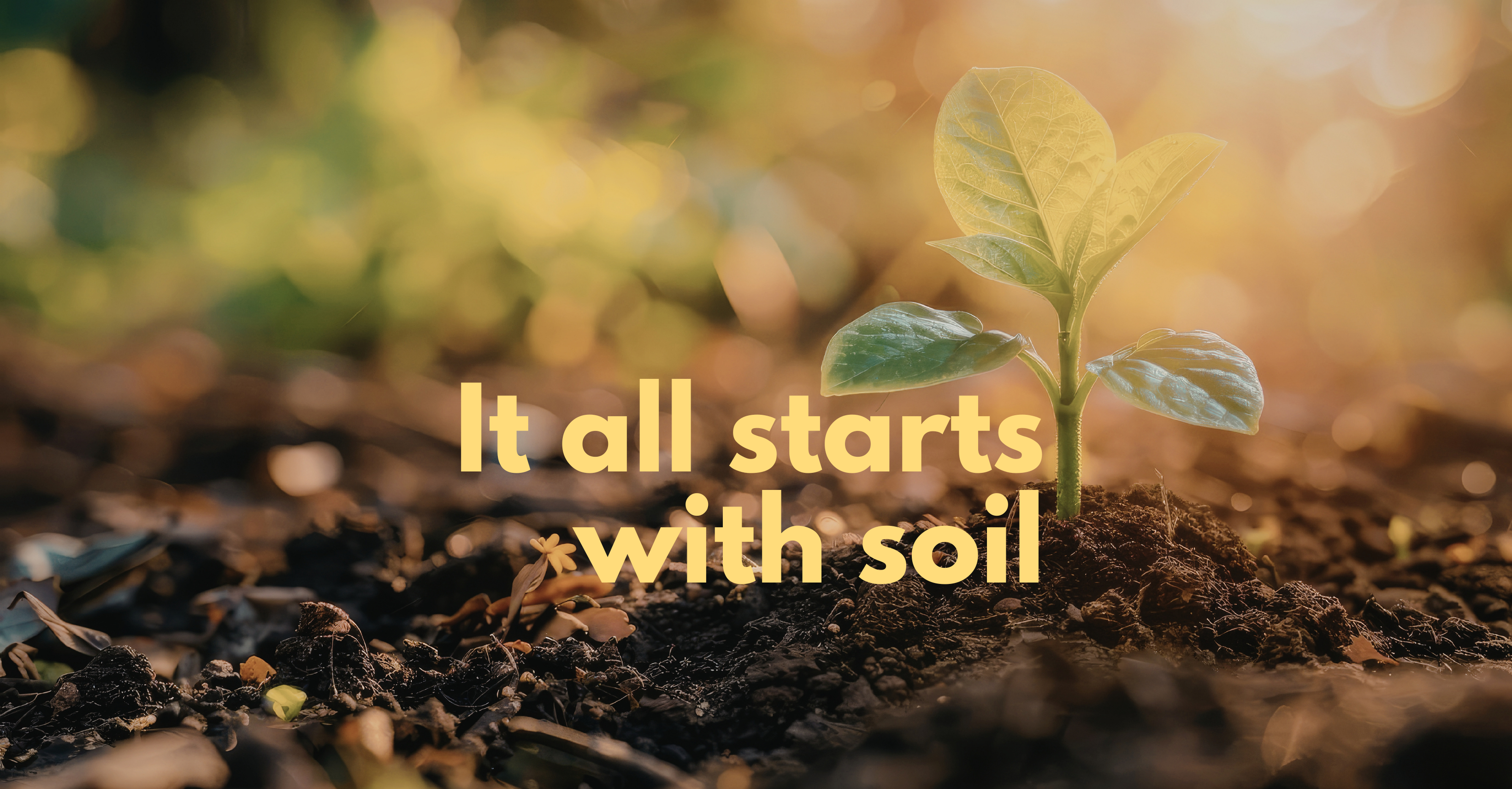
When we think about growing food or supporting wildlife, it’s easy to focus on what we can see – plants, flowers, vegetables, trees. But everything starts somewhere much less visible. It starts with soil.
This is the first in a short series of pieces by Master Composter and Cheltenham resident Steve Watts, exploring how looking after the ground beneath our feet supports not just the plants we grow, but the wider health of our town, its wildlife and the people who live here.
“Soil is not an obviously important or interesting topic? Maybe. Soil has been evolving on planet earth for half a billion years. And it’s what allows us to grow most of the food we depend on. So it’s quite important!
But what actually is soil? It’s easy to think of it as just “dirt”, but in reality soil is a complex, living system.
It is part mineral – a mix of clay, sand and silt, in some proportion.
But that’s only the beginning.
Soil is also organic matter. Not much, around 2% – 6%. Some is living, literally billions upon billions of organisms – bacteria, fungi, nematodes, protozoa, worms and many more. Plus, other material which was once living – plants, animals, insects, etc., that has been decomposed into other substances. This is a pool of nutrients for plants and soil life to utilise.
Soil also contains air – healthy soil is around 25% air. This might sound surprising, but it’s essential. Plant roots and soil life need oxygen to survive, just as we do.
Soil contains water – healthy soil is around 25% water. Water allows nutrients to be transported through the plants we grow, and supports the activity of all those organisms within the soil.
When all of these elements are in balance – minerals, organic matter, air, water and living organisms – soil becomes something quite remarkable: a living system that can support healthy, productive plants.
The plants we grow in our pots, gardens and allotments are evolved for these soil conditions. When soil is healthy, plant roots extend deeply into well structured soil, accessing nutrients and water by working co-operatively with a thriving community of soil organisms. And it’s this system which provide us with wonderful food.
Often soil is not in the best condition. It may lack structure, meaning oxygen can’t penetrate deeply into the soil, and water is not stored. There may be a lack soil life, the ecosystem of organisms which plants rely on. If not covered with plants or mulch, soil temperatures can become very high, potentially too high for plant roots to operate effectively. In these conditions plants tend to survive but not particularly thrive.
It’s a reminder that if we want to grow food successfully – or support nature in our gardens and green spaces – looking after the soil is one of the most important things we can do.”
Want to learn more?

Steve is a member of Grow Your Own Cheltenham. He works on local allotments as a volunteer and grows in his own garden. He uses no-dig methods and has a deep understanding of how healthy soil underpins everything else.
He’s part of the Gloucestershire Master Composter network and runs friendly, practical talks, demos and workshops on soil, composting and no-dig growing for local groups, schools and community spaces. If you’d be interested in hosting something like this – or just want to find out more – you can get in touch with him directly at stephen.watts@yahoo.co.uk