When we think about healthy gardens our eye is drawn to what we see above the surface – flowers blooming, vegetables growing, trees leafing out in spring. But, the foundation of that healthy garden lay underground.
In our previous story, we explored soil health, and the soil attributes which support a productive, verdant garden with abundant wildlife. We learnt that healthy, productive soil has structure. It’s great at holding air. It holds water without becoming waterlogged. It hosts a complex eco systems of organisms which provide plants with various services – nutrients, water and pathogen protection.
According to local soil expert Steve Watts, healthy soil is much more than simply “dirt”.
“Good, healthy soil is most definitely not just dirt. It’s alive, a world of fungi, bacteria, nematodes, protozoa, earthworms and a cast of others. It’s hard to appreciate because most soil life is microscopic, far too small for our human eyes to see. But although we can’t see the billions of bacteria in a teaspoon of good soil, they are there.
Plants on land have been around for ½ billion years. So has soil and the life it contains. They’ve evolved together, soil being engineered to provide plants with the environment they need. And in exchange, plants provide energy (via photosynthesis) to the underground world. ½ billion years of evolution has come up with something pretty amazing!
Good, healthy soil has structure. Actually, it’s the soil organisms that develop this structure, aggregating particles, storing nutrients, making pores & channels. It’s this structure which allows soil to both drain excess water and hold onto moisture – that’s a good trick. And those pores & channels allows soil to ‘breathe’, drawing in fresh, oxygen-rich air, pushing out stale, carbon air. This is the water & air that is vital to plant roots and the countless organisms living alongside them.
When soil loses its structure or the abundance & diversity of its ecosystem – through compaction, excessive digging, chemical imbalance – life below ground will struggle. And this causes the plants and wildlife above ground to struggle also.
So how can we help maintain healthy soil in our gardens and green spaces?
Here are five simple principles:
1. Minimise soil disturbance
Digging and turning soil has a number of consequences. Soil organic matter (SOM) is lost – SOM decomposes at a faster rate when exposed to air. Soil aggregates, those sponge-like structures which store nutrients, air, water and soil organisms are inevitably damaged. And, the near-invisible network of mycorrhizal fungi, which work with plant roots to provide additional water and nutrients are damaged.
Disturbing soil is necessary at times, for example to remove a deeper rooted plant/weed, but in the main its best to leaves soil alone to do its own thing.
2. Add compost
Compost is a feedstock for the eco system of organisms which live in soil. Ideally, compost should be applied to the surface, avoiding soil disturbance. This mimics the way nature adds matter to soil – fallen leaves, twigs and other organic material simply fall onto the surface, incorporated into the soil naturally.
3. Keep living roots in the ground
Plants are at the top of the soil food chain, they provide energy to soil life.
Plant photosynthesis produces > Plant Roots Exudates > feed soil organisms.
Without a plant cover the soil ecosystem is diminished. Whereas, continuous planting via perennials, native vegetation, annuals and cover crops maintains the ecosystem
4. Cover the soil surface
A mulch of some description (rough compost, decomposed woodchip, etc.) and/or dense planting, helps protect the soil surface. One significant benefit is retention of soil moisture. This helps both plants and soil life, particularly when its hot/dry (and saves water and watering)
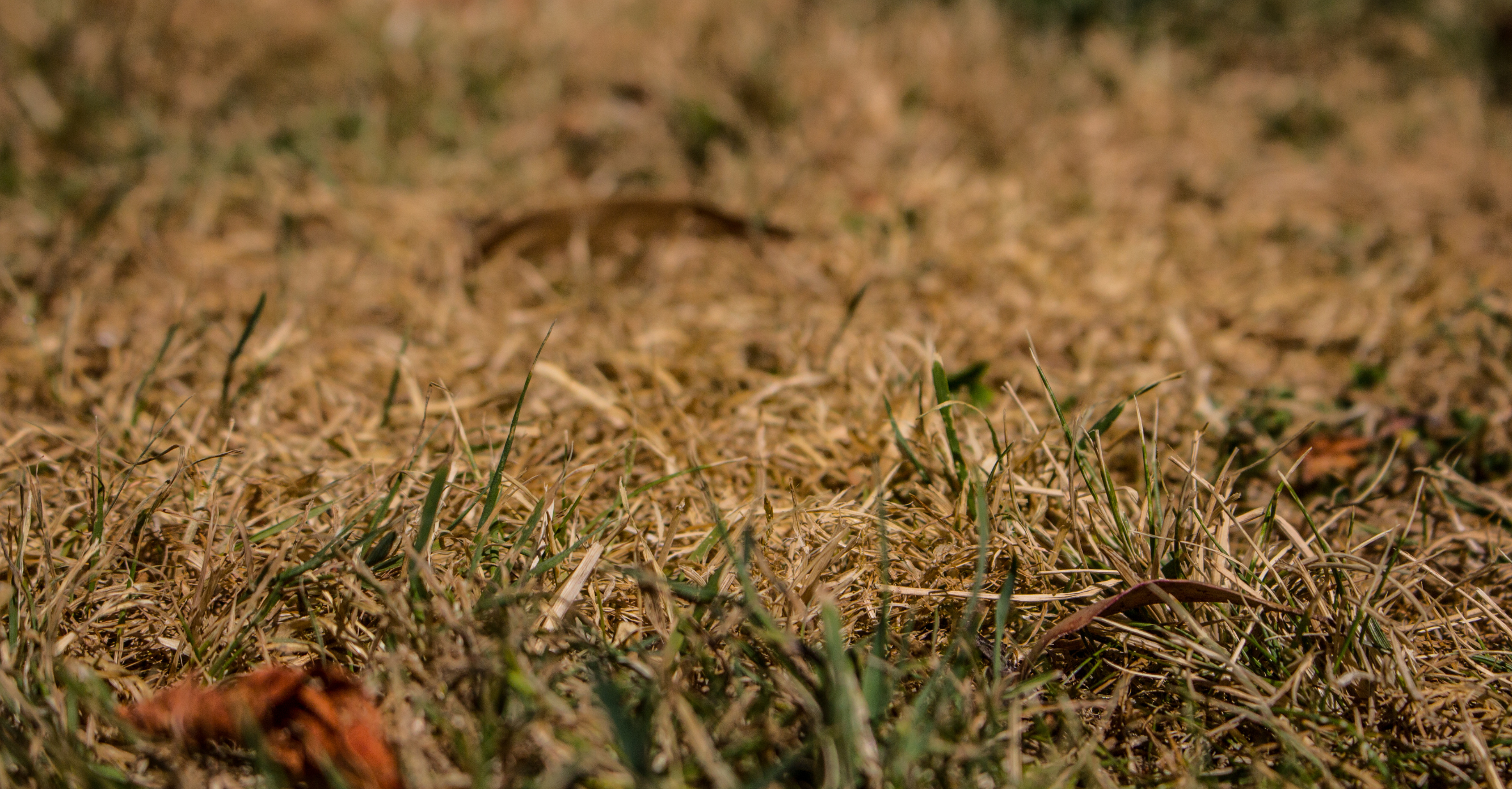
Bare soil can become very hot. Soil life doesn’t want 30°C. Nor do plants want their root zone to be overheated – the plant may stop yielding or potentially die. Whereas covered soil remains cool, quite possibly 10°C or more cooler than bare soil which is exposed to the summer sun.
In nature, soil is rarely left exposed.
5. Avoid / Reduce pesticides and synthetic fertilisers
Some herbicide directly kills beneficial soil organisms. Other products are known to create chemical imbalances within the soil. It’s also true that a huge amount is unknown – what is the full effect of pesticide & synthetic fertiliser on the highly complex world that is the soil ecosystem ? We don’t know.
My preference is to leave nature to do what it’s been doing successfully for ½ billion years.
None of these ideas are about achieving perfection. In fact, one of the most important things healthy soil teaches us is patience. Soil takes time to build. Life underground develops slowly through countless small interactions happening every day beneath our feet. But when we care for soil, we are supporting far more than just the plants in our gardens. We are helping create resilient spaces that store water, support pollinators, lock away carbon and provide habitat for an astonishing diversity of life.”
Want to learn more?

Steve is a member of Grow Your Own Cheltenham. He works on local allotments as a volunteer and grows in his own garden. He uses no-dig methods and has a deep understanding of how healthy soil underpins everything else. Steve’s next Composting workshop is being held at the Community Rest Garden on 27th June. See our What’s On page for more information.
He’s part of the Gloucestershire Master Composter network and runs friendly, practical talks, demos and workshops on soil, composting and no-dig growing for local groups, schools and community spaces. If you’d be interested in hosting something like this – or just want to find out more – you can get in touch with him directly at stephen.watts@yahoo.co.uk